Kuwait’s Health Minister Dr. Ahmad Al-Awadhi opened World Sight Day activities at Jaber Al-Ahmad Hospital on Monday, October 12, urging early eye screening, including eye-pressure checks that can catch glaucoma before symptoms appear, as officials announced drop-free retinal imaging and a plan to link screening cameras across health centers.
The hospital’s ophthalmology department organized the event to promote early eye screening as a way to prevent vision loss. Visitors could get their eyesight, eye pressure and the back of the eye checked by specialists. Officials said the Ministry of Health now has retinal imaging devices that work without dilating drops. They also announced a plan to connect screening cameras across health centers to speed up results.
Photos from the venue show screening stations in an open hospital area, set up under World Sight Day banners in Arabic and English. Staff members are seen examining seated visitors.
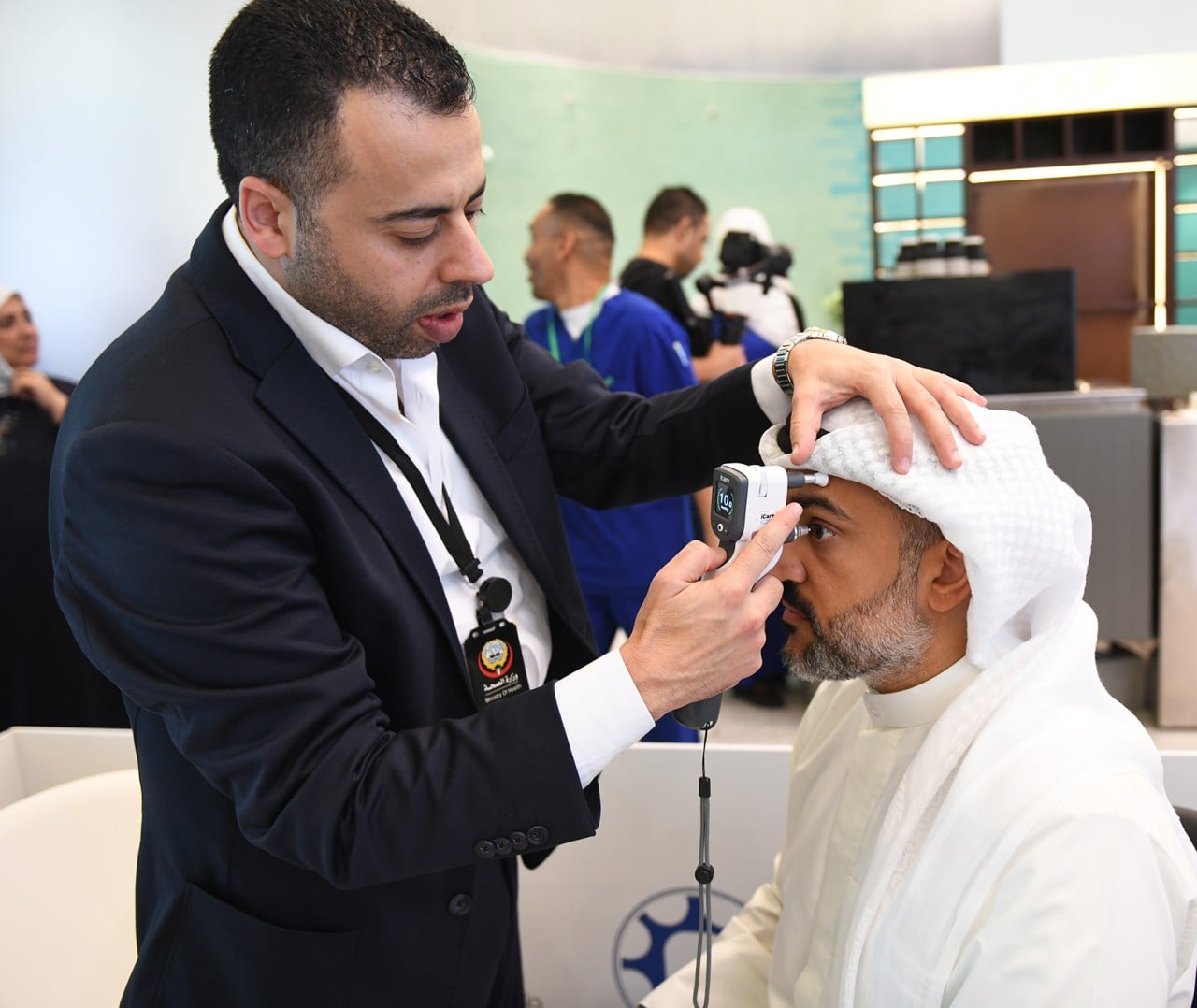
Hospital director Dr. Nada Al-Hassan told the Kuwait News Agency (KUNA), which reported the launch on X, that the hospital runs screening programs for common diseases to reduce treatment burdens and complications. She said healthcare should not stop at treating patients in clinics and should also encourage regular checkups.
Minister of Health opens World Sight Day activities at Jaber Al-Ahmad Hospital to raise public awareness of the importance of prevention through early screening https://t.co/qi9hGbwb45 #KUNA #Kuwait https://t.co/GpCBuxbv8U
— Kuwait News Agency – English Feed (@kuna_en) October 12, 2026
Glaucoma often has no early warning
Dr. Ahmad Al-Fodari, who heads the hospital’s ophthalmology department and the ministry’s eye departments council, said the eye-pressure test helps detect glaucoma. The disease frequently causes no obvious symptoms in its early stages. He recommended regular eye exams, especially for people over 40. That is worth noting for workers who spend long hours on screens, behind the wheel or on job sites and may skip checkups.
The test, called tonometry, measures the pressure inside the eye. It helps screen for glaucoma but can’t diagnose it on its own. High eye pressure is the biggest risk factor for the disease. Some clinics use an instrument that lightly touches the numbed eye, while others use a quick puff of air. Either way, the test should not hurt. Pressure can change over time, so doctors may repeat the reading. An abnormal result usually leads to more tests, such as a visual field test and an exam of the optic nerve. Reports on the Kuwait event don’t say which method was used at the screening stations.
What the Ministry Announced
During the event, the Ministry also announced the following:
- No dilating drops: The ministry now has devices that image the retina and examine the back of the eye without dilating drops. Dr. Al-Fodari said early detection of retinopathy limits complications.
- Services across the country: Eye care is available in most primary care centers and public hospitals in every governorate.
- Faster results: A planned electronic link between screening cameras at health centers should get results to eye doctors sooner and shorten referral and appointment waits.
- Next event: An awareness event on keratoconus and its treatment is planned for November.
More Health Events at the Hospital
Other than kicking off the World Sight Day celebrations, Jaber Al-Ahmad Hospital is also hosting other events, including an early breast cancer screening event (on Wednesday), World Rheumatism Day (on Thursday) and psoriasis.
About World Sight Day
The World Health Organization and the International Agency for the Prevention of Blindness launched World Sight Day, observed on the second Thursday of October. Kuwait’s activities took place on Monday, October 12.