Travelers going to Kuwait must secure advance government clearance before carrying certain prescription medicines into the country. The U.S. Embassy in Kuwait issued a security alert on December 22, 2025, warning that travelers may be detained and their medication confiscated if they arrive without the required certification.
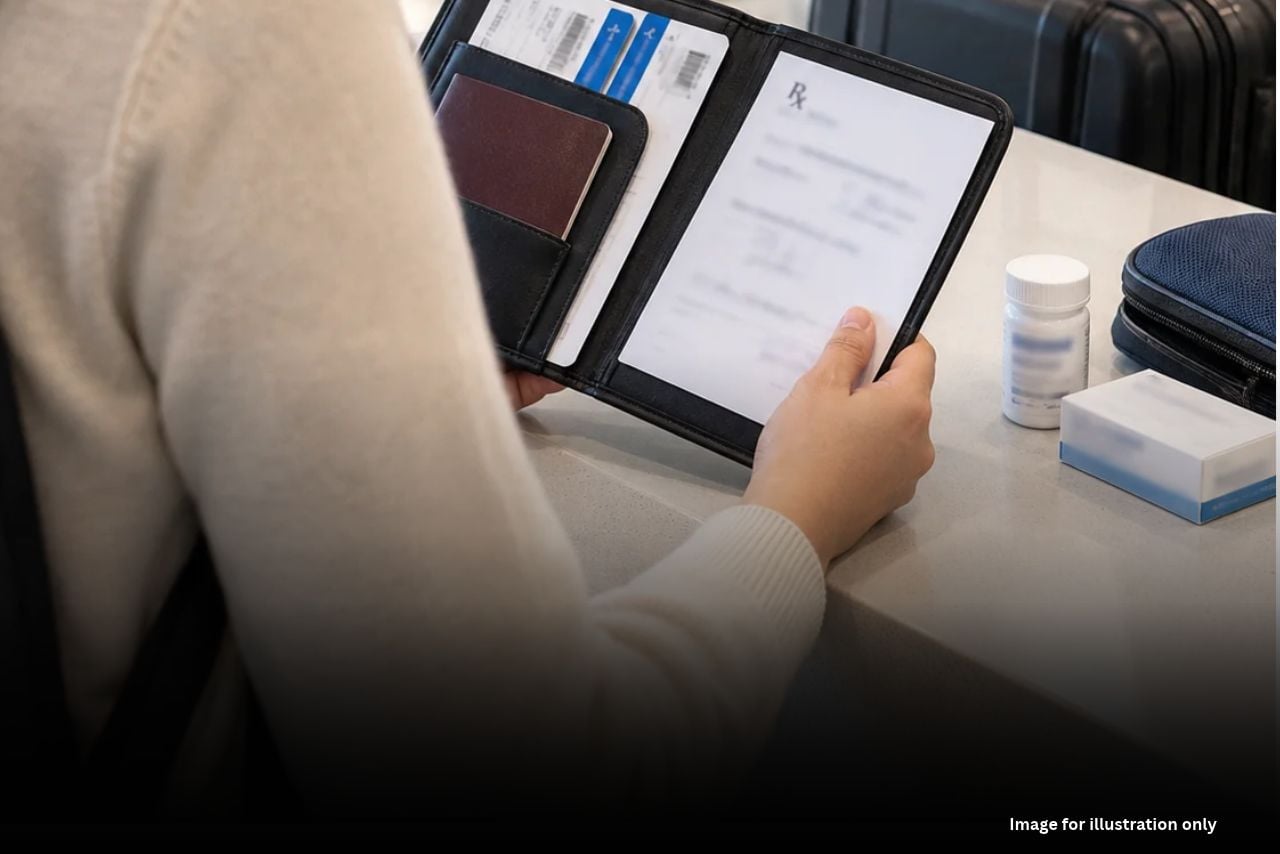
The rule covers several common medicines for pain, anxiety, sleep, and ADHD, even when they were legally prescribed abroad. Travelers may bring only a limited supply—15 days for some narcotics and up to 30 days for certain psychotropic medicines—depending on the medication. Certifications must be presented to Kuwaiti Customs upon arrival. Travellers should check the exact requirements with the Kuwaiti embassy or consulate before their flight, as rules and restricted-drug lists may change.
What Travelers Must Do
All travelers bringing restricted prescription medicines to Kuwait must obtain written or electronic clearance from official Kuwaiti authorities abroad before boarding their flight.
- Contact the nearest Kuwaiti Embassy or Consulate before departure to confirm whether your medicine requires approval.
- Secure certification of your medical report or prescription through a Kuwaiti Health Office abroad or the Kuwaiti Embassy in the country where the prescription was issued.
- Carry only the permitted quantity: up to 15 days’ supply for certain narcotic preparations and up to 30 days for certain psychotropic preparations.
- Submit the certification and prescription or medical report to Kuwaiti Customs officials upon arrival.
- Keep medicines in their original packaging, with the prescription and certification readily available for inspection.
Medicines that May Require Clearance
The U.S. Embassy alert said common prescriptions that may require certification include:
- Alprazolam (Xanax)
- Adderall (amphetamine/dextroamphetamine)
- Hydrocodone/acetaminophen, such as Vicodin
- Zolpidem (Ambien)
- Clonazepam (Klonopin)
- Methylphenidate (Ritalin, Concerta)
- Diazepam (Valium)
- Codeine-containing medicines
- Pregabalin (Lyrica)
- Tramadol (Ultram)
- Gabapentin (Neurontin, Gralise)
- Lorazepam (Ativan)
This list is informational, subject to change, and not a complete list of medicines restricted under Kuwaiti law. Travelers remain responsible for confirming whether their specific medication is covered before traveling.
What Can Happen at the Airport
If a traveler arrives in Kuwait with a restricted medicine but no required clearance, police may detain the traveler and confiscate the medication. Possessing more than the allowed quantity, or failing to certify the prescription, may also lead to detention and confiscation under Kuwaiti law.
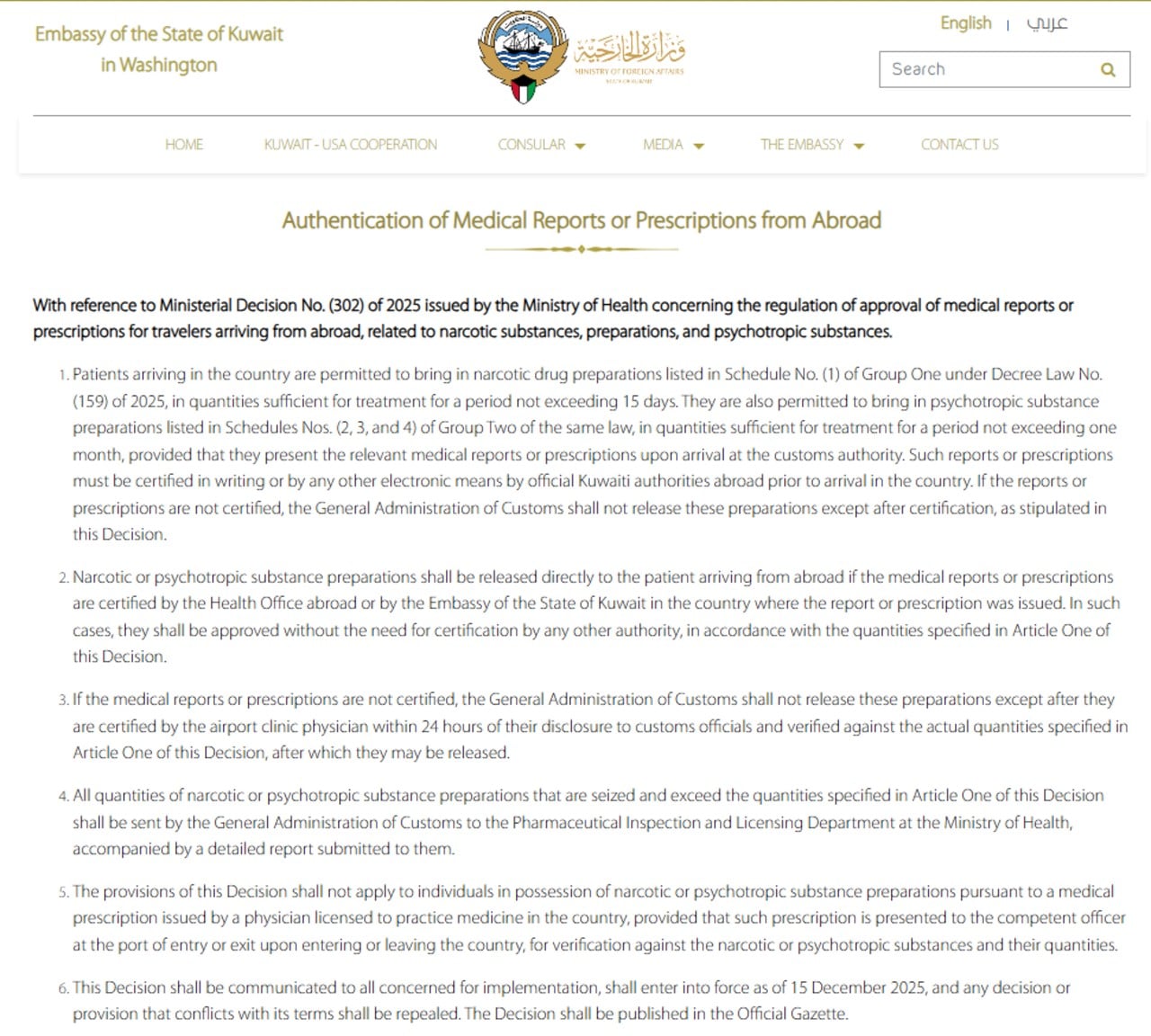
Kuwait’s Ministry of Foreign Affairs said customs will not release uncertified narcotic or psychotropic preparations unless they are certified by an airport clinic physician within 24 hours after disclosure to customs and verified against permitted quantities. This does not guarantee release, so travelers should not rely on airport verification as a substitute for advance clearance.
Important Reminders
- A prescription from the Philippines, the United States, or another country does not automatically make the medicine lawful to bring into Kuwait.
- Some prescription drugs legal abroad are not legal in Kuwait, and carrying them may result in denial of entry or criminal penalties.
- Kuwaiti law applies to all travelers, including foreign workers, regardless of where the prescription was issued.
- Travelers should allow enough time for review and certification before departure.
- For updates, consult the Kuwait Ministry of Health, Kuwait Customs, and the nearest Kuwaiti embassy or consulate.
For travelers, the safest step is simple: before packing any maintenance or prescription medicine, especially those prescribed from abroad, verify its status with the Kuwaiti embassy or consulate and obtain the required certification before flying.