Private-sector workers in Kuwait are entitled to at least 30 working days of paid annual leave under the country’s Labour Law. The entitlement is set out in Article 70, which was amended by Law No. 85 of 2017.
Workers cannot take annual leave in their first year until they complete at least six months with the same employer. However, they still earn leave on a pro-rata basis for the portion of the year they have worked.
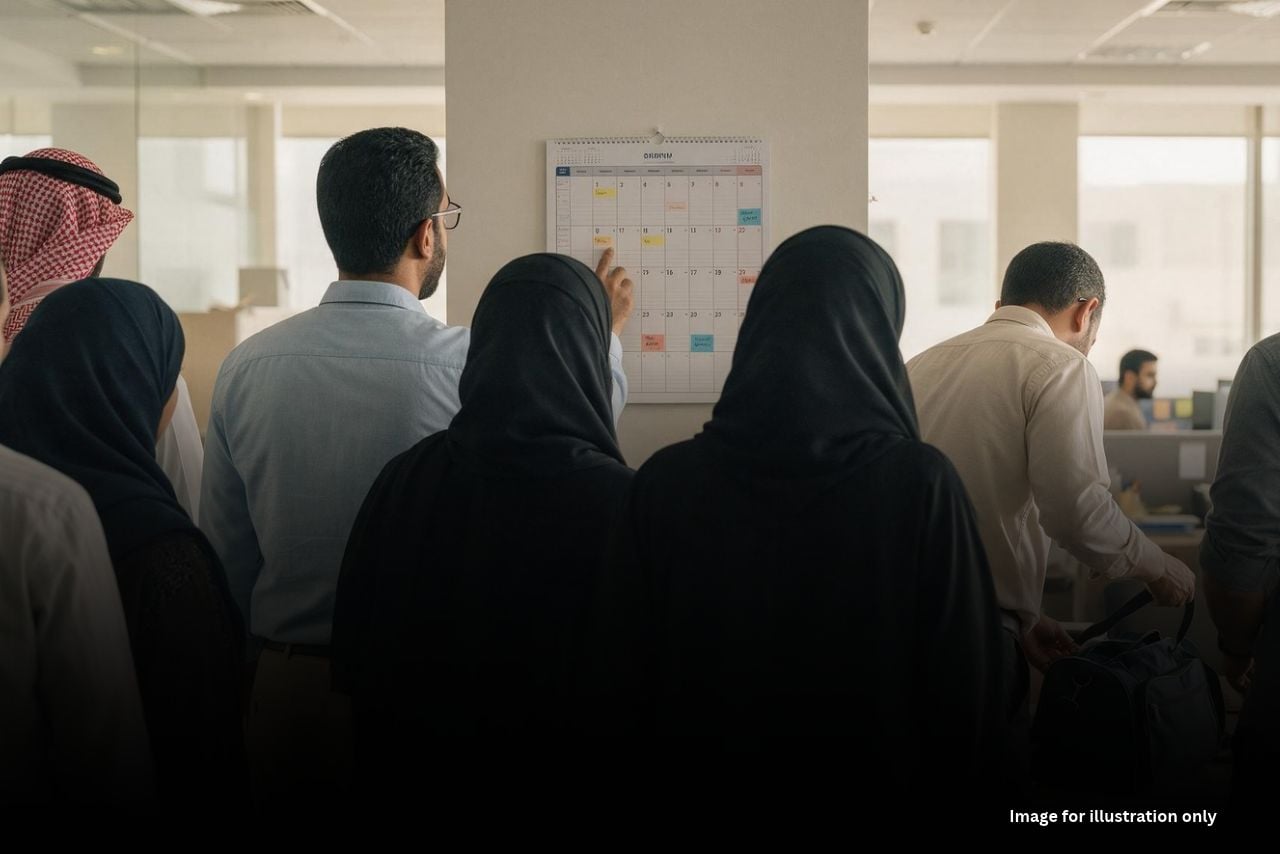
The full English text of Kuwait’s Labour Law published by the Public Authority of Manpower confirms that weekends, public holidays, and sick leave falling within an annual vacation do not count toward the 30-day entitlement.
When Leave Must be Paid
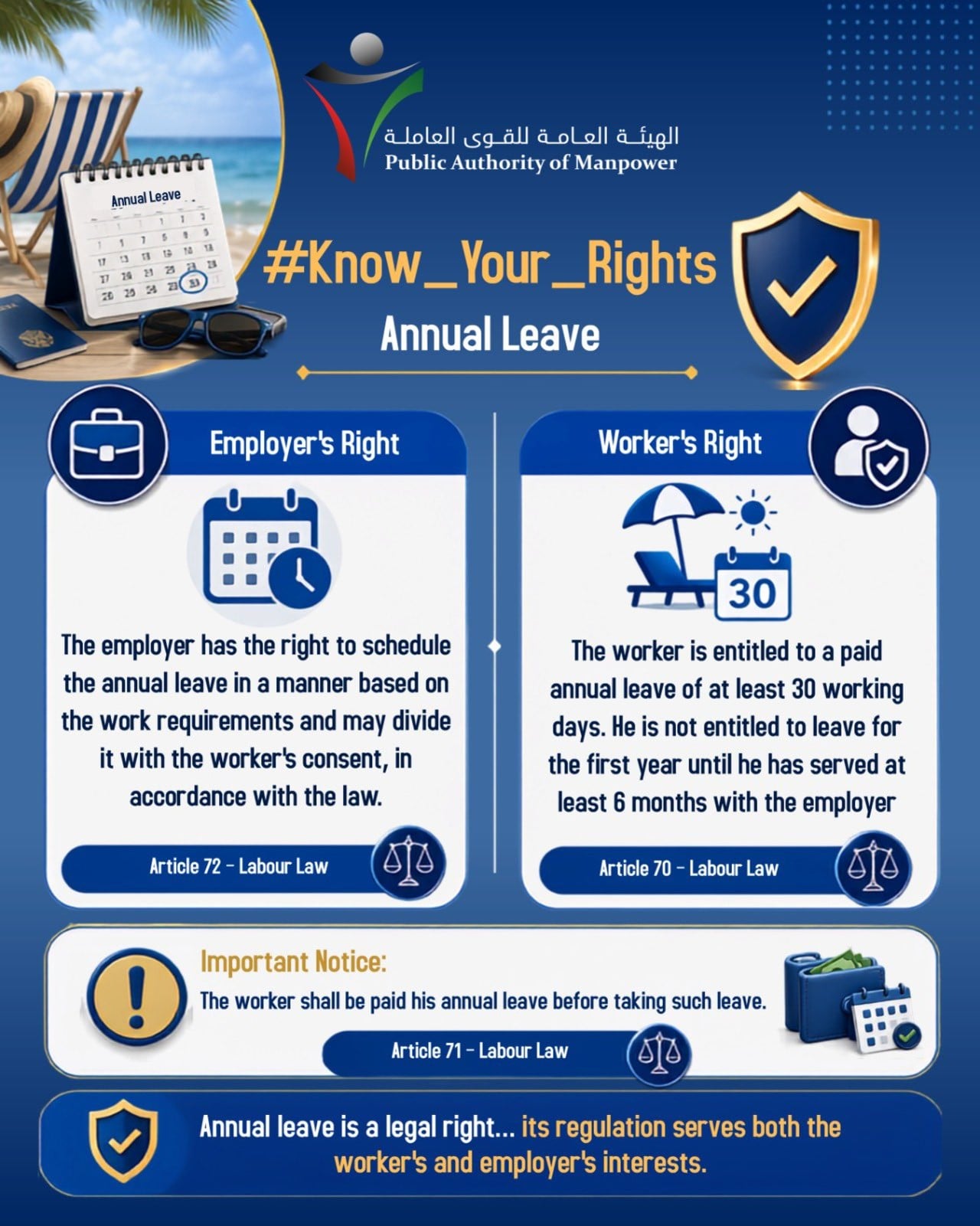
Employers must pay workers for annual leave before it begins, according to Article 71. The Public Authority for Manpower repeated this point in a recent “Know Your Rights” advisory on employee leave.
The employer may decide when leave is taken and may split it after the first 14 days, but only with the worker’s agreement. Workers can carry unused leave forward for up to two years and take it in one block with employer approval. Carrying leave for longer requires consent from both sides.
Unused Leave at End of Job
Workers are entitled to cash payment for any accumulated annual leave when their contract ends. Article 73 makes this a legal entitlement rather than a matter left to the employer’s discretion.
Workers also cannot give up their annual leave in exchange for payment. If an employee takes paid leave but works for another employer during that period, the employer may recover the leave pay.
Other Leave Entitlements
Kuwait’s Labour Law provides several other forms of paid leave:
- Hajj leave: 21 paid days for workers with two continuous years of service who have not performed Hajj before.
- Bereavement leave: Three fully paid days after the death of a first- or second-degree relative.
- Iddat leave: Four months and 10 days of fully paid leave for a Muslim working woman whose husband has died. A non-Muslim working woman receives 21 paid days.
- Academic leave: Paid study leave for a higher degree related to the worker’s field, subject to a return-to-work condition of no more than five years.
- Unpaid leave: Employers may approve additional unpaid leave at a worker’s request.
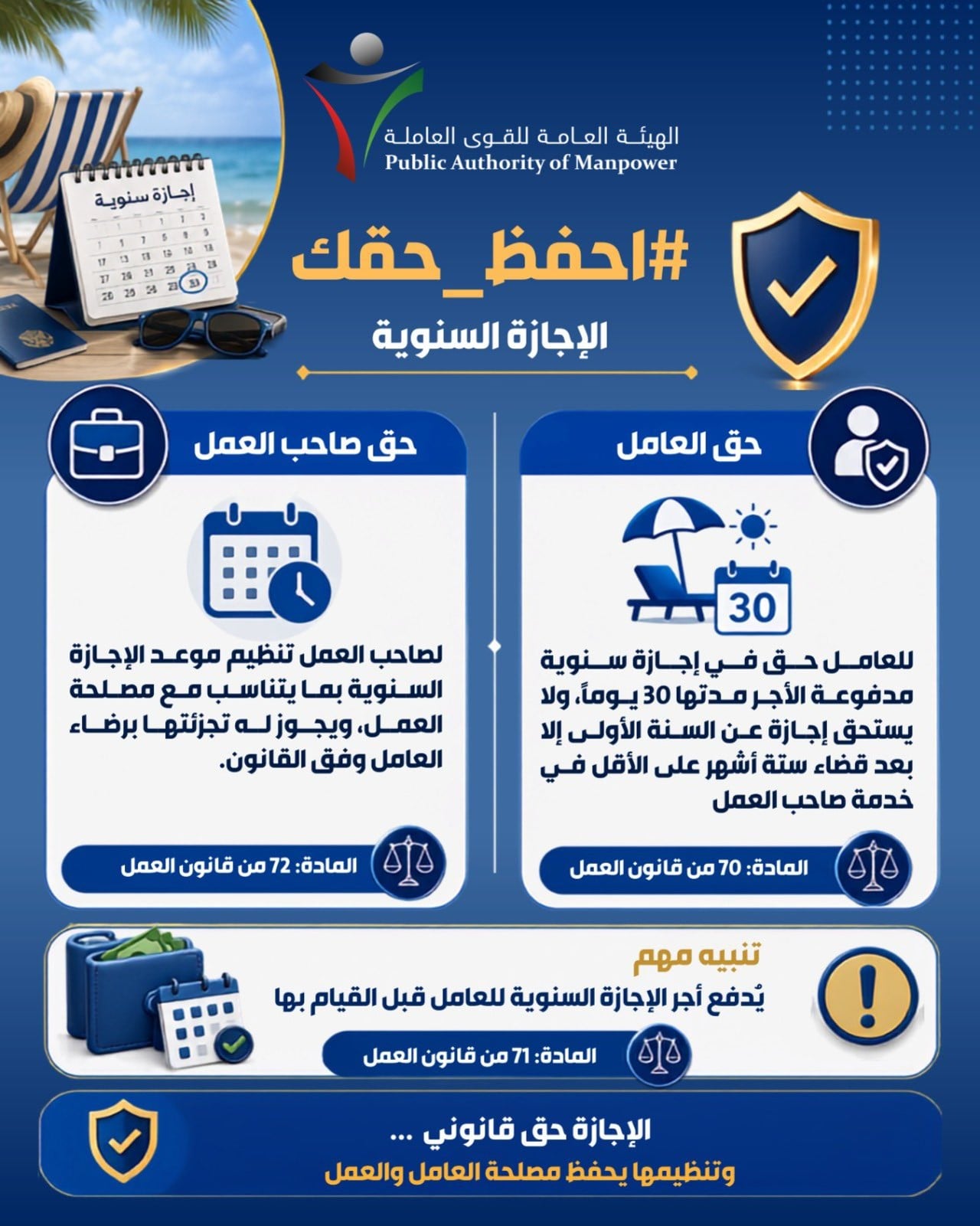
الإجازة السنوية Annual Leave #احفظ_حقك #Know_Your_Rights #الهيئة_العامة_للقوى_العاملة #manpower_kuwait https://t.co/OWImBxr4NE
— الهيئة العامة للقوى العاملة (@manpowerkwt) August 17, 2026
Proposed Increase Remains Pending
Kuwait’s National Assembly has again taken up a proposal to raise private-sector annual leave from 30 to 35 working days. Kuwait Times, citing KUNA, reported that lawmakers approved the amendment in a first reading in October 2026, but it still requires a second reading to become law.
The proposal is not yet part of the Labour Law. For now, the legal minimum remains 30 working days. The Public Authority of Manpower’s official English text of the law continues to set the minimum at 30 working days under Article 70. Workers should check their contracts and seek guidance from the Public Authority for Manpower if there is a dispute over leave pay, carryover, or end-of-service dues.