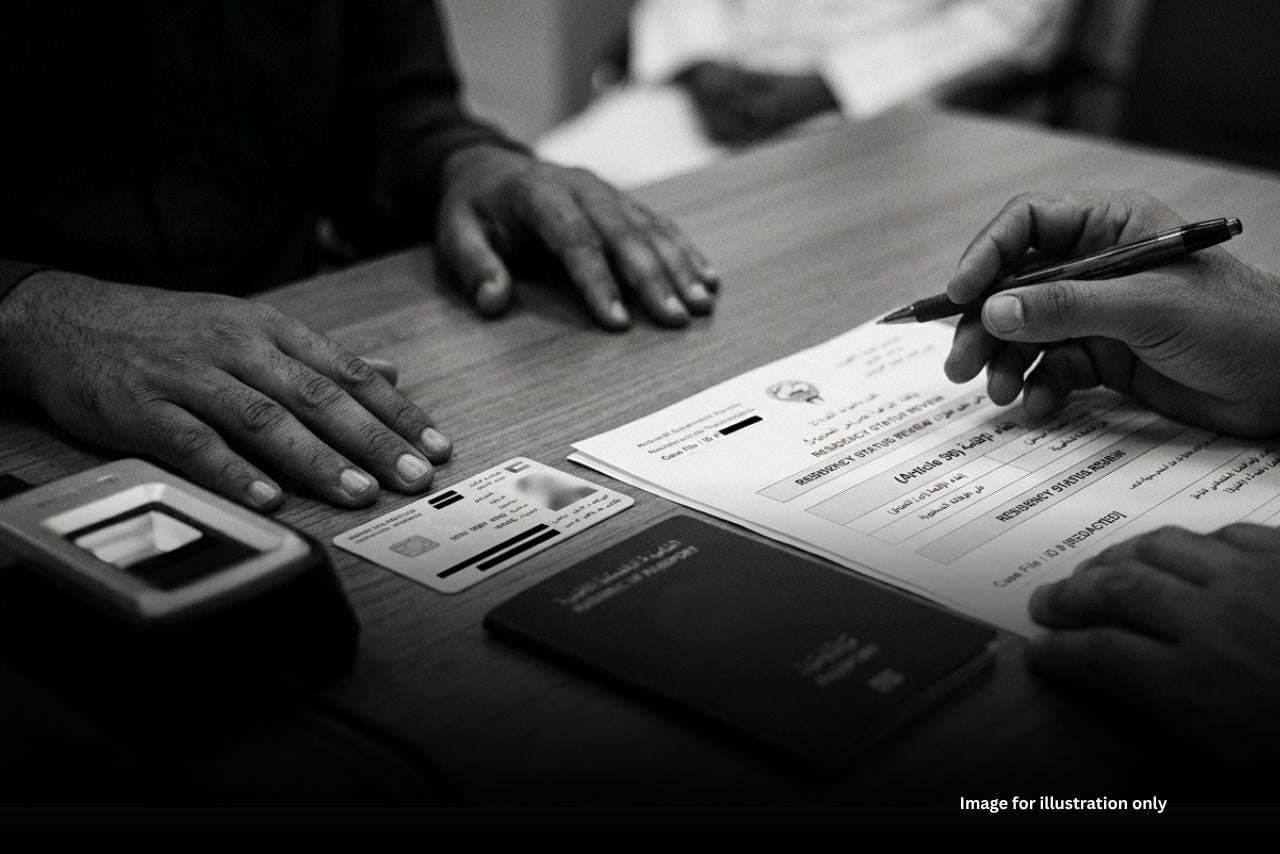
Kuwait can deport a foreign resident even if their Iqama remains valid. The country’s new residency law allows administrative deportation in limited but serious circumstances, including having no lawful income, working without authorization, or posing a risk to public interest, security, or morals.
The order can also affect dependent family members. The rules replace a residency framework that had been in place for more than six decades. For foreign workers and other residents, a valid permit alone does not guarantee protection from removal.
The Law Behind The Rule
Kuwait’s foreign-residency system is now governed by Amiri Decree-Law No. 114 of 2024, the Foreigners’ Residence Law. The decree was issued on 28 November 2024 and contains 36 articles across seven chapters. The official Arabic text was published in Kuwait Al-Youm, the country’s Official Gazette, and it took effect on 5 January 2025, according to an announcement by the Ministry of Interior.
- Article 35 cancels Amiri Decree No. 17 of 1959, the previous Foreigners’ Residence Law.
- The new law replaced rules that had been in force for more than six decades.
- Its Executive Regulations were issued under Minister of Interior Decision No. 2249 of 2025 and took effect on 24 December 2025.
When Deportation Is Allowed
Article 20 gives the Ministry of Interior authority to order a foreign resident’s deportation even if the person holds a valid residence permit. The law identifies three grounds.
- No lawful source of income. A resident may face deportation if they have no legitimate means of living or income in Kuwait.
- Unauthorized work. Article 19 prohibits working for another employer or entity without the required approval. Working outside the sponsor’s authorization can therefore become a deportation issue.
- Public interest, security, or morals. The Minister of Interior may order deportation where it is considered necessary to protect public interest, public security, or public morals.
Article 19 also bars third parties from sheltering or employing foreigners with expired or invalid residency, or housing people without valid residency in Kuwait.
What Article 38 Adds
Article 38 of the Executive Regulations reportedly identifies the same three administrative-deportation cases.
- Foreigners with no source of income in Kuwait.
- Residents working for an employer other than their official sponsor without approval from the competent authorities.
- Cases where the Minister of Interior considers deportation necessary for public interest, security, or morals.
The regulations also refer to deportation in criminal-related cases. These include convictions for felonies or crimes involving moral turpitude or dishonesty, as well as repeat convictions within a five-year period.
Other Risks To Residency
A valid Iqama does not remove every deportation risk. Other legal and administrative issues can still put a resident’s status in jeopardy.
- Absconding reports: A sponsor-filed absconding or “tagharrub” complaint can flag a worker’s file in the system.
- Criminal convictions: A court may order deportation after a criminal conviction or the completion of a prison sentence.
- Financial and legal violations: Bounced cheques, unpaid civil or commercial debts that lead to travel bans, and traffic fatalities where fault is attributed to the driver may create legal exposure.
- Judicial deportation: Courts can issue deportation orders independently of administrative action.
These situations do not automatically lead to deportation. The outcome depends on the facts, official records, and the decision of the authority handling the case.
Families Can Be Affected
Deportation can extend beyond the person named in the order. Article 21 allows the decision to include foreign family members whom the resident legally supports.
- Article 22 permits detention for up to 30 days when needed to enforce a deportation order, with renewal possible.
- The breadwinner or employer generally bears deportation costs under Article 24.
- The Minister of Interior may authorize deduction of those costs from the foreigner’s available assets.
What Changed From 1959
The old law allowed deportation despite a valid permit in three cases: a court judgment, lack of means of living, or a breach of public order or security.
- Articles 16 to 22 of the 1959 law governed deportation.
- A deported person could not return without special permission from the Minister of Interior’s office.
- The new law removes the former court-decision requirement for certain Article 19 violations and allows administrative deportation instead.
- It remains unclear whether administrative deportations for non-criminal matters can be challenged in court under the current framework.
How Residents Can Protect Themselves
Foreign residents should keep their documents and employment records in order. They should also avoid work arrangements that conflict with their sponsored residency without the proper approvals.
- Check residency and legal status through the Kuwait Mobile ID app or the Ministry of Interior E-Services Portal.
- Keep passports, civil IDs, residency papers, contracts, and work permits updated.
- Identify the exact legal basis for any deportation decision before filing a grievance, clemency request, or application to return.
- Do not assume that filing a request automatically stops enforcement of a deportation order.