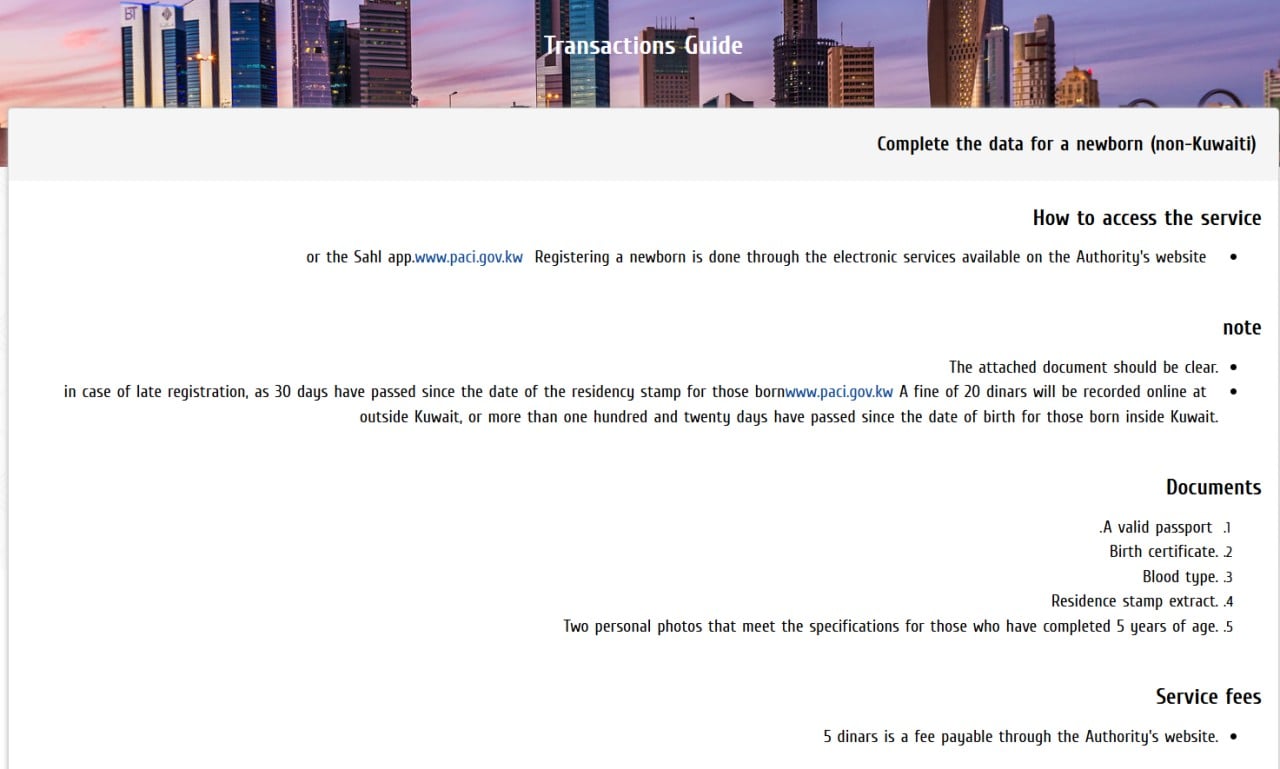
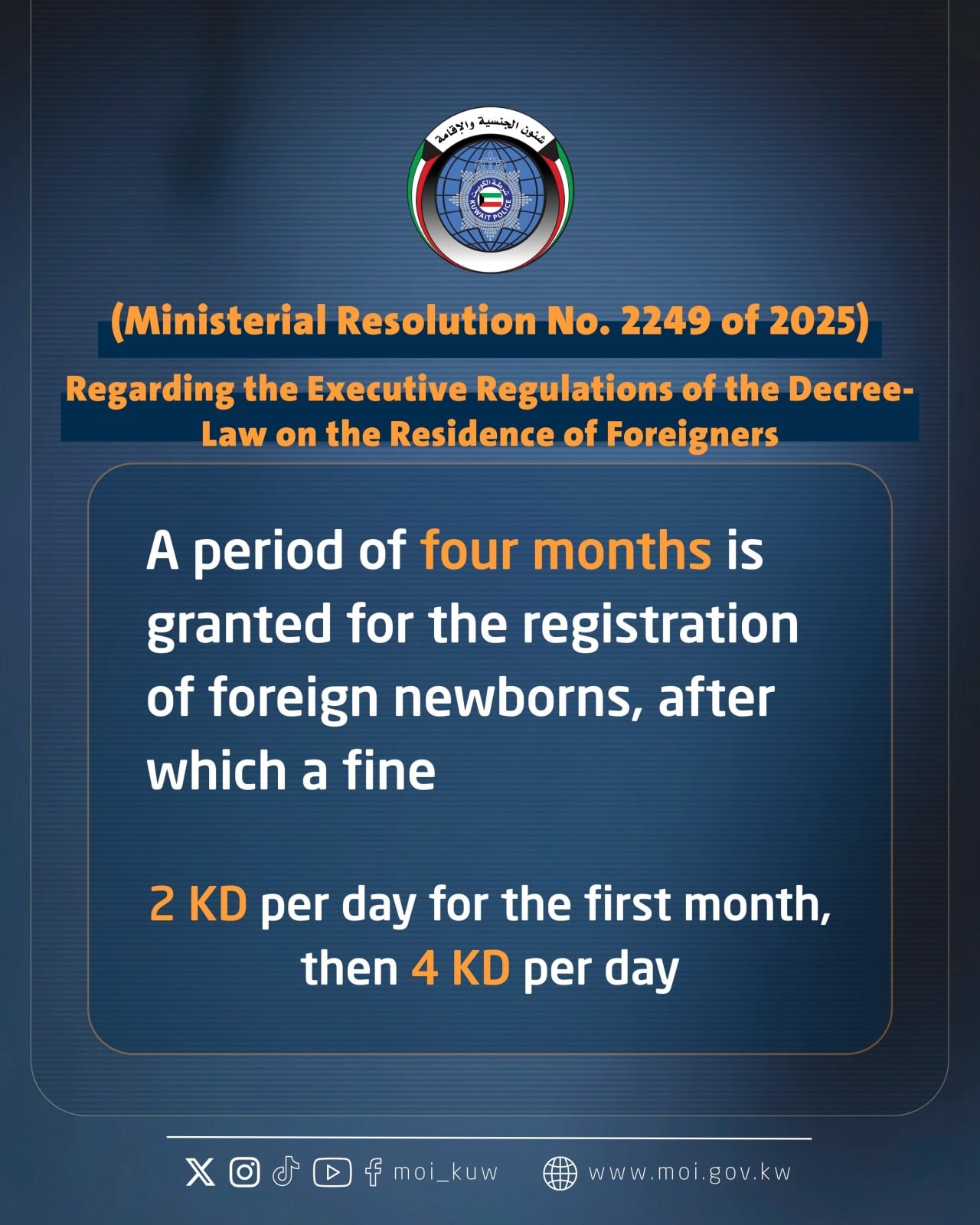
For expat parents in Kuwait, a newborn brings joy—and a paperwork deadline that cannot wait. PACI gives families 120 days to register a baby born in Kuwait. Miss it, and the fine is KD 20.
The rule applies to non-Kuwaiti newborns, including children of Overseas Filipino Workers (OFWs) and other foreign residents. It does not mean every expat family faces the same deadline: babies born outside Kuwait have a different 30-day rule tied to their residence stamp.
- Babies born in Kuwait must be registered within 120 days of birth.
- Babies born abroad must be registered within 30 days of the residence stamp.
- PACI charges KD 5 for the non-Kuwaiti newborn registration service.
- A late registration carries a KD 20 penalty.
- A newborn cannot receive Kuwaiti residency without a passport from the parents’ home country.
Where To Register
Kuwait’s Public Authority for Civil Information (PACI) handles the civil registration of non-Kuwaiti newborns. Parents can submit the application through the official PACI newborn registration guide or the Sahel app.
This is only one part of the process. Parents must still secure the birth certificate, obtain the child’s passport, apply for residency, and then request the civil ID.
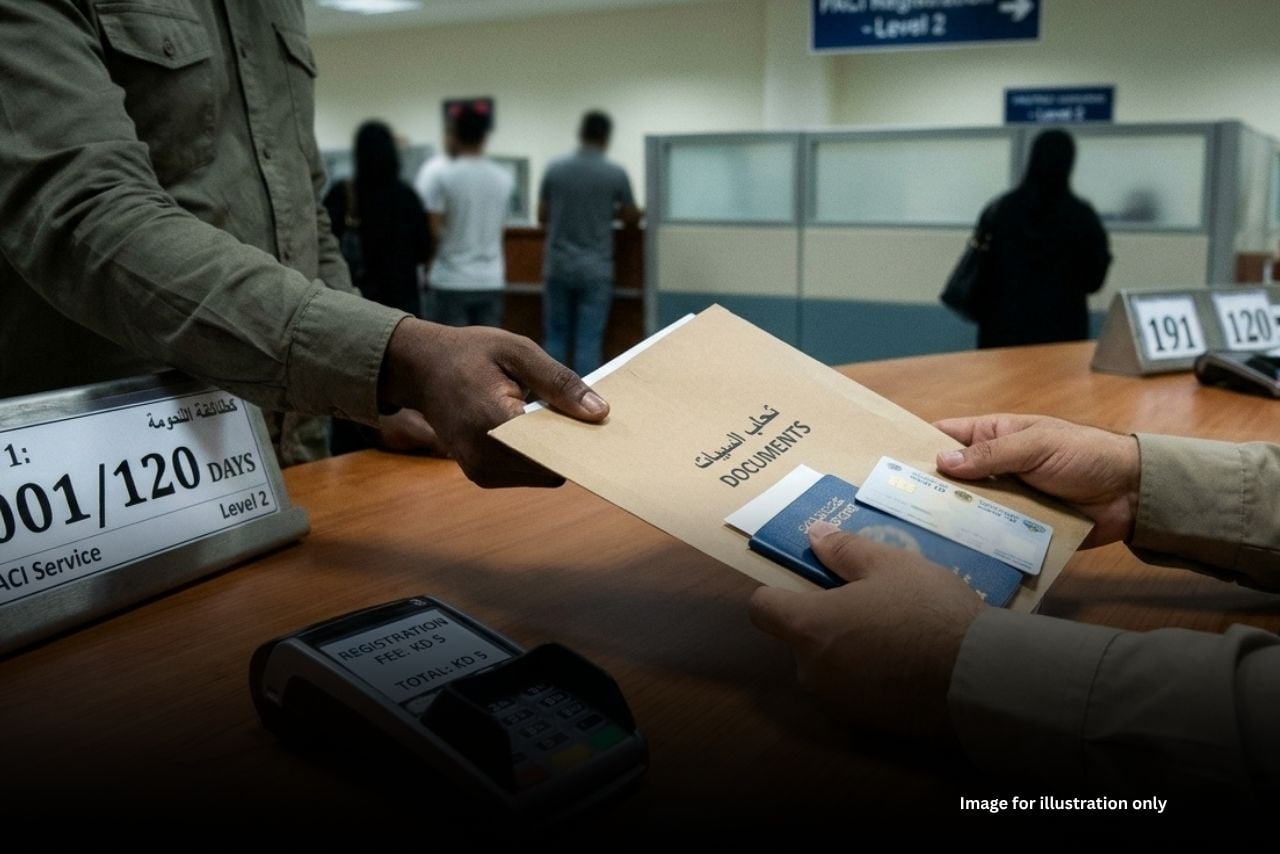
PACI requires clear, readable documents. Blurry scans or inconsistent details can slow down the application.
Documents To Prepare
Before applying, parents should have the following ready:
- The child’s valid passport
- Birth certificate
- Blood type
- Residence stamp extract
- Two photos meeting PACI specifications, but only for children aged five and above
The KD 5 fee covers PACI registration only. Passport, residency, and civil ID fees are separate.
Start At The Hospital
The process begins the moment the baby is born. The hospital issues a birth notification containing the baby’s details, time and place of birth, and the mother’s information.
Parents then register the birth with the health authority and obtain the official birth certificate. This document becomes the basis for everything that follows: the passport, residency, civil ID, and later school records.
Check the child’s name before approving the certificate. A spelling mismatch between the birth certificate and passport can delay or reject the residence application.
Passport First, Residency Second
A child born to expatriate parents does not automatically become Kuwaiti. The child’s nationality follows the parents’ home-country law, so the embassy or consulate must issue the passport.
That step cannot be delayed. Kuwaiti residency is recorded against a travel document, meaning parents generally cannot obtain a residence permit before the child has a passport.
Embassy processing times vary. Some require the birth to be registered in the home country first, while others require attested documents or in-person attendance by one or both parents.
Residence And Civil ID
Once the passport is ready, the sponsor applies for dependent residence through the Ministry of Interior. The child’s residency is tied to the sponsor’s status, so any issue with the sponsor’s residence can affect the baby’s application.
The father is normally the sponsor. A mother may sponsor the child in certain cases, including when the father has died, the parents are divorced, the father does not live in Kuwait, or the mother works in an eligible profession or government body.
These cases often require extra documents, such as proof of guardianship, the father’s consent, or evidence that he cannot sponsor the child.
After residency is issued, parents must apply for the child’s civil ID through PACI. The civil ID is linked to the family’s registered address and is needed for many everyday transactions, including access to clinics and schools.
What Delay Can Cost
A late registration is more than an administrative inconvenience. PACI imposes a KD 20 violation once the deadline passes, and the fine must be settled before the process can move forward.
The consequences can extend further:
- The child may be treated as in breach of Kuwait’s residence rules.
- Travel may be blocked until the status is regularised.
- The child may not receive a civil ID, affecting access to schools, clinics, and routine services.
- The sponsor’s own residence renewal or sponsorship transfer may be affected.
Parents who face delays beyond their control should keep every receipt and message. A passport application receipt or embassy correspondence can support a request for an exemption or reduction, if the rules allow one.
Common Mistakes
Many families wait until just before a trip to begin the process. That is often too late, especially if the embassy takes weeks to issue a passport.
Other avoidable errors include:
- Applying for residency while the sponsor’s own residence is expiring.
- Travelling with the baby before the residence is issued.
- Using incorrect information to register a child from an undocumented marriage.
- Assuming a friend’s past experience still applies under current rules.
For an undocumented marriage, the proper route is usually a Family Court case to prove the marriage or establish descent. Submitting false information or forged documents can create criminal liability.
If you are a Filipino, move quickly after the birth: obtain the Kuwaiti birth certificate, apply for the child’s Philippine passport through the Philippine Embassy, then apply for dependent residence and complete PACI registration.
Remember: Treat the 120-day period as a final deadline, not a starting point. Start the process in the first days after birth, keep every document, and confirm current requirements directly with PACI, the Ministry of Interior, and the relevant embassy.