A smaller salary payment can leave workers struggling to cover rent, daily expenses and money sent home. In Kuwait, the Public Authority for Manpower (PAM) has reminded private-sector employers that agreed wages remain protected, even when a worker owes money.
The authority’s awareness notice explains two limits: deductions for employer loans cannot exceed 10 percent of a worker’s wage, while debt-related deductions are subject to a broader 25 percent ceiling. Employers also cannot charge interest on loans or debts owed to them.
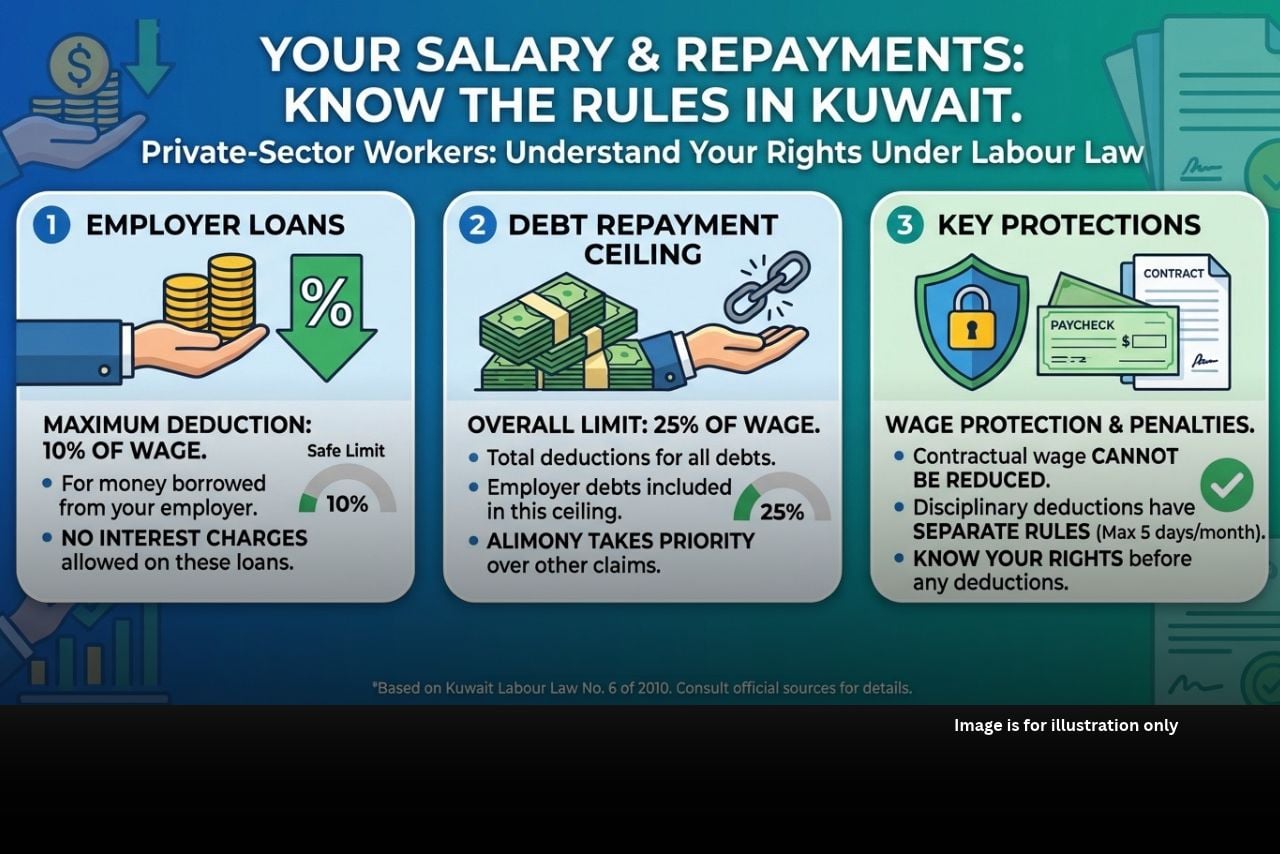
The rules appear in Kuwait’s Labour Law No. 6 of 2010, available through the Public Authority for Manpower’s official English text. Article 28 protects contractual wages, while Article 59 governs deductions used to recover debts.
Your Agreed Salary Is Different From Your Take-Home Pay
Article 28 says the wage agreed in an employment contract cannot be reduced while the contract remains valid, whether it is for a fixed or indefinite period. Agreements that contradict this protection are void.
A lawful debt repayment may reduce the amount a worker receives, but it does not give the employer permission to lower the contractual wage itself.
That distinction matters when a payslip shows less than expected. A deduction to repay a loan and a permanent salary cut are not the same thing, and PAM’s notice addresses them separately.
Employer Loans Carry A 10 Percent Repayment Limit
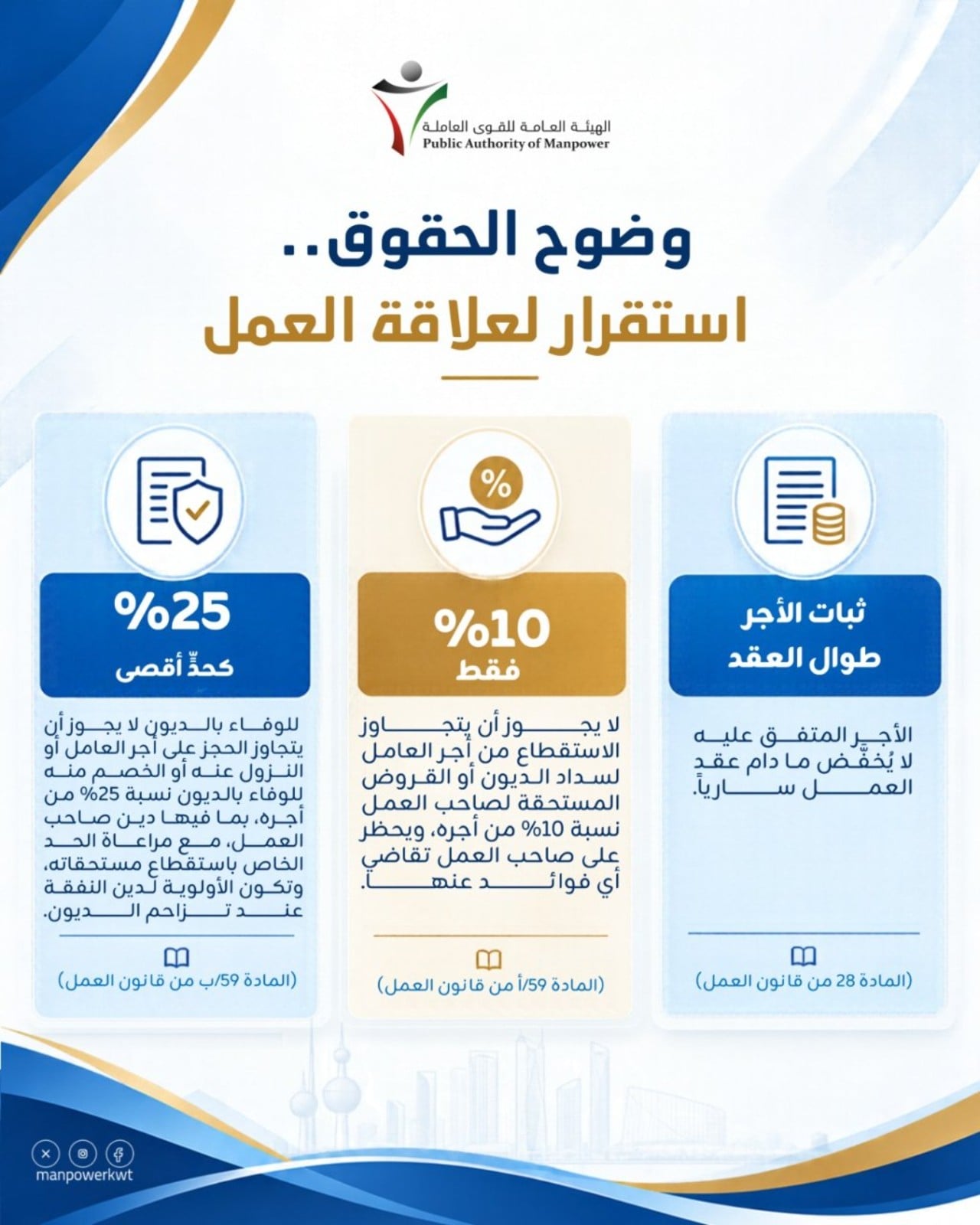
Workers repaying money borrowed from their employer are covered by Article 59(a). It limits salary deductions for those debts or loans to 10 percent of the worker’s wage and prohibits interest charges.
An employer therefore cannot deduct whatever amount it chooses simply because a worker has an outstanding loan.
The interest ban also stands on its own. Keeping the repayment below the deduction limit does not make it lawful to add interest to the debt.
The 25 Percent Ceiling Is Not An Extra Deduction
Article 59(b) sets a 25 percent ceiling on wage withholding or deductions for debt settlement. Amounts owed to the employer are included within that ceiling.
The key points are:
- Employer-loan repayments remain subject to the specific 10 percent limit.
- Employer debts also count toward the broader 25 percent debt-recovery ceiling.
- Alimony takes priority when competing debt claims arise.
The percentages cannot simply be added together. The notice does not authorize an employer to take 10 percent for a company loan and another 25 percent for other debts.
وضوح الحقوق.. استقرار لعلاقة العمل #الهيئة_العامة_للقوى_العاملة #manpower_kuwait https://t.co/TqHd2onGbt
— الهيئة العامة للقوى العاملة (@manpowerkwt) October 30, 2026
Other Deductions Have Separate Rules
The 25 percent ceiling does not mean an employer may deduct a quarter of a worker’s salary for any reason. Article 59 deals with debts, not every adjustment or penalty that may appear on a payslip.
Disciplinary deductions fall under separate provisions. Article 37 requires written notification of the alleged violation and an opportunity for the worker to respond before a penalty is imposed.
Article 38 limits deductions for penalties to five days’ wages in a month. Any excess is carried into later months. These provisions should not be confused with the employer-loan and debt-repayment limits.
For workers, the distinction is straightforward: an unchanged contractual salary, a loan repayment and a disciplinary deduction involve different protections. PAM’s reminder does not give employers a general right to cut pay or use the debt ceiling to justify unrelated deductions.